
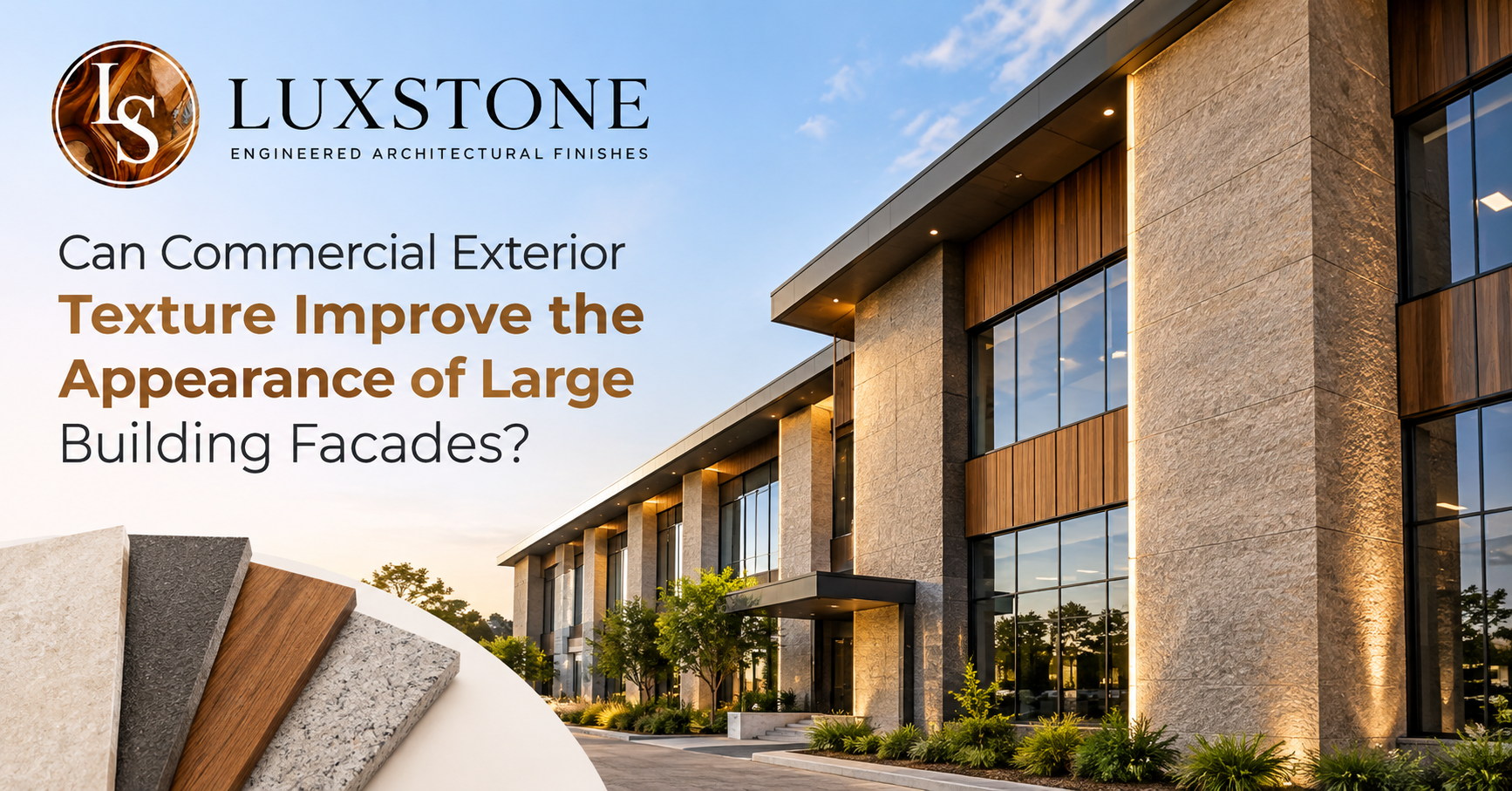
Certainly, there are various texture solutions available to enhance the look of large building structures from the outside. As opposed to regular paint finishes, a textured surface is able to provide an interesting effect in terms of interaction with natural light and adding volume.
By partnering with the commercial exterior Texture Supplier in Delhi NCR, an architect, construction company, and business owner will gain access to various textures and finishes designed specifically for commercial architecture.
Key Points
- The use of texture can bring out details on large facades of commercial structures.
- There are certain textures that allow breaking up large areas of walls without altering the structure of the building.
- Natural stone textures will add volume and a premium architectural effect to the building façade.
- Various textures will accentuate the entrance, pillars, and other parts of the building façade.
Why Large Commercial Facades May Appear Visually Flat
Large buildings tend to have many exterior walls. If these walls are painted one uniform colour, they may appear to be visually flat or monotonous.
This is especially evident in commercial buildings that have large areas with blank and long elevations.
Adding texture to the exterior helps to add another layer to the visual aspect of the wall. Differences in grain, depth, and reflection can help give structure to the wall without making any drastic architectural changes.
For a pre-existing commercial building, this would come in very handy for those who wish to update their facade without doing a lot of construction.
How Commercial Exterior Texture Changes the Appearance
Texture influences the way people perceive a building from different distances.
At a closer range, the surface reveals its grain and material character. From farther away, the texture creates subtle variations in light and shadow across the facade.
A commercial exterior Texture Supplier in Delhi NCR can offer different finishes depending on the desired architectural effect. A fine texture may create a restrained and contemporary appearance, while a more pronounced finish can make feature areas visually stronger.
The right choice depends on the building's scale, architectural style, and overall design objective.
Adding Depth to Large Building Elevations
One of the biggest advantages of exterior texture is its ability to introduce depth without changing the underlying wall.
A smooth surface reflects light more consistently. A textured surface creates small variations that produce highlights and shadows as sunlight moves throughout the day.
This can make a large elevation feel less monotonous. Designers can also use different texture intensities across selected sections to create visual hierarchy.
For example, a building may use a relatively subtle texture across its main walls and a stronger finish around the entrance or reception area.
Creating a More Natural Architectural Appearance
Modern commercial buildings increasingly combine contemporary forms with natural-looking materials. Stone-inspired exterior textures can help achieve this balance.
Natural stone-based coatings can incorporate materials such as marble, granite, or limestone particles, depending on the product. These particles can create variations in grain and surface character.
Such finishes can provide an alternative visual approach to completely smooth painted facades while complementing other materials used in commercial architecture.
Using Texture to Highlight Architectural Features
Exterior texture does not have to cover every part of a building.
Designers can use it strategically to highlight architectural elements such as:
- Main entrances
- Columns
- Feature walls
- Window surrounds
- Vertical facade sections
- Recessed areas
- Signage backgrounds
- Boundary and landscape walls
Using texture selectively can create contrast between different parts of the building while keeping the overall facade visually coordinated.
How Texture Supports Commercial Brand Identity
A commercial building's exterior often contributes to how customers, visitors and business partners perceive the property.
A distinctive facade can help create a stronger visual identity. Texture, colour and material combinations can be selected to complement a company's branding while maintaining an architectural appearance.
For offices, retail properties, hospitality buildings and other commercial spaces, a carefully designed facade can make the property appear more contemporary and considered.
However, texture should support the architecture rather than become an overly decorative element. Controlled material variation generally works better than using too many unrelated finishes.
Texture Options for Different Commercial Buildings
Different types of commercial properties may require different approaches.
An office building may benefit from a refined texture that works with glass and metal. A retail property may use stronger facade texture around entrances and display areas.
Hotels and hospitality spaces may favour natural stone-inspired finishes that create a more premium and welcoming appearance. Industrial or institutional buildings may benefit from simpler textures that add character without excessive decoration.
A reliable commercial exterior Texture Supplier in Delhi NCR can help project teams explore different surface finishes based on the intended application and design requirements.
Can Texture Refresh an Existing Commercial Building?
Yes. Exterior texture can be particularly useful during facade renovation.
An existing building may remain structurally sound but have an outdated paint finish or visually plain exterior. Applying a suitable textured coating can change the surface character while retaining the existing building form.
This can be a practical approach for commercial properties where major structural modifications would create additional disruption.
However, texture coating is a surface treatment and should not be used to conceal serious structural deterioration. Cracks, unstable surfaces, or persistent moisture issues should be properly assessed before the coating is applied.
Why Surface Preparation Matters
The quality of the final facade depends significantly on the condition of the surface underneath.
Before application, the wall should be checked for dirt, loose material, old coatings, cracks, and moisture-related problems. Appropriate preparation should then be carried out according to the selected product's requirements.
This is particularly important on large commercial buildings because inconsistencies that are barely noticeable on a small wall can become highly visible across an extensive facade.
A properly prepared surface provides a better foundation for achieving a consistent texture and finish.
Choosing the Right Texture for a Large Facade
The scale of the building should influence texture selection.
Very fine textures may become visually insignificant across a large elevation, while extremely pronounced textures may dominate the architecture.
Colour also matters. Lighter surfaces can emphasise texture through changing shadows, while darker or more saturated finishes can create a stronger visual statement.
Before finalising the material, architects and property owners should consider a physical sample or facade mock-up. Viewing the texture under actual outdoor lighting can provide a more realistic understanding of the finished appearance.
Common Mistakes to Avoid
One common mistake is selecting texture based solely on a small sample. Large exterior surfaces can produce a very different visual effect.
Another is using too many texture variations across one building. Excessive variation can make a commercial facade appear disconnected.
Ignoring the surrounding architecture is another issue. The selected texture should work with windows, doors, glass, metal, signage, and landscaping.
Finally, surface preparation and application should not be treated as secondary steps. Even a high-quality coating can produce an inconsistent result when the underlying surface or application process is unsuitable.
How a Supplier Supports Commercial Facade Projects
A supplier can contribute to more than the procurement stage. Product information, texture options, samples, and application guidance can help architects and contractors make informed decisions.
For large commercial projects, consistent material supply is also important. If different sections of the building are completed in phases, maintaining consistency in texture and finish can help create a more uniform facade.
Working with a commercial exterior Texture Supplier in Delhi NCR can therefore support both design planning and practical project coordination.
Frequently Asked Questions
Can exterior texture improve the appearance of a commercial building?
Yes. Textured coatings can add depth, surface variation, and visual character to commercial facades, particularly where large wall areas would otherwise appear flat.
Can commercial exterior texture be used during renovation?
Yes. Suitable textured coatings can refresh an existing facade without necessarily requiring major structural modifications, provided the underlying surface is suitable and properly prepared.
Can texture be used only on selected facade areas?
Yes. Texture can be applied strategically to entrances, feature walls, columns, recessed areas, and other architectural elements to create contrast and visual hierarchy.
Are natural stone textures suitable for commercial buildings?
Natural stone-inspired textures can be suitable for commercial applications where designers want a more substantial or organic surface appearance. Product suitability should be assessed according to the building and application.
How do I choose the right exterior texture?
Consider the building's architectural style, scale, surrounding materials, climate exposure, desired appearance, and maintenance requirements. Physical samples or mock-ups can help before full-scale application.
Why should commercial projects work with an experienced supplier?
An experienced supplier can provide information about available textures, product characteristics, samples, and application requirements. Consistent material availability can also be important for large or phased projects.
Final Thoughts
Commercial exterior texture can transform large building facades by adding depth, surface variation, and a stronger architectural identity. It can be used across an entire elevation or selectively on feature areas, making it adaptable to different commercial design requirements.
Luxstone Texture offers natural stone-based texture solutions for interior and exterior applications, helping commercial properties create distinctive surfaces that combine visual character with practical performance.