
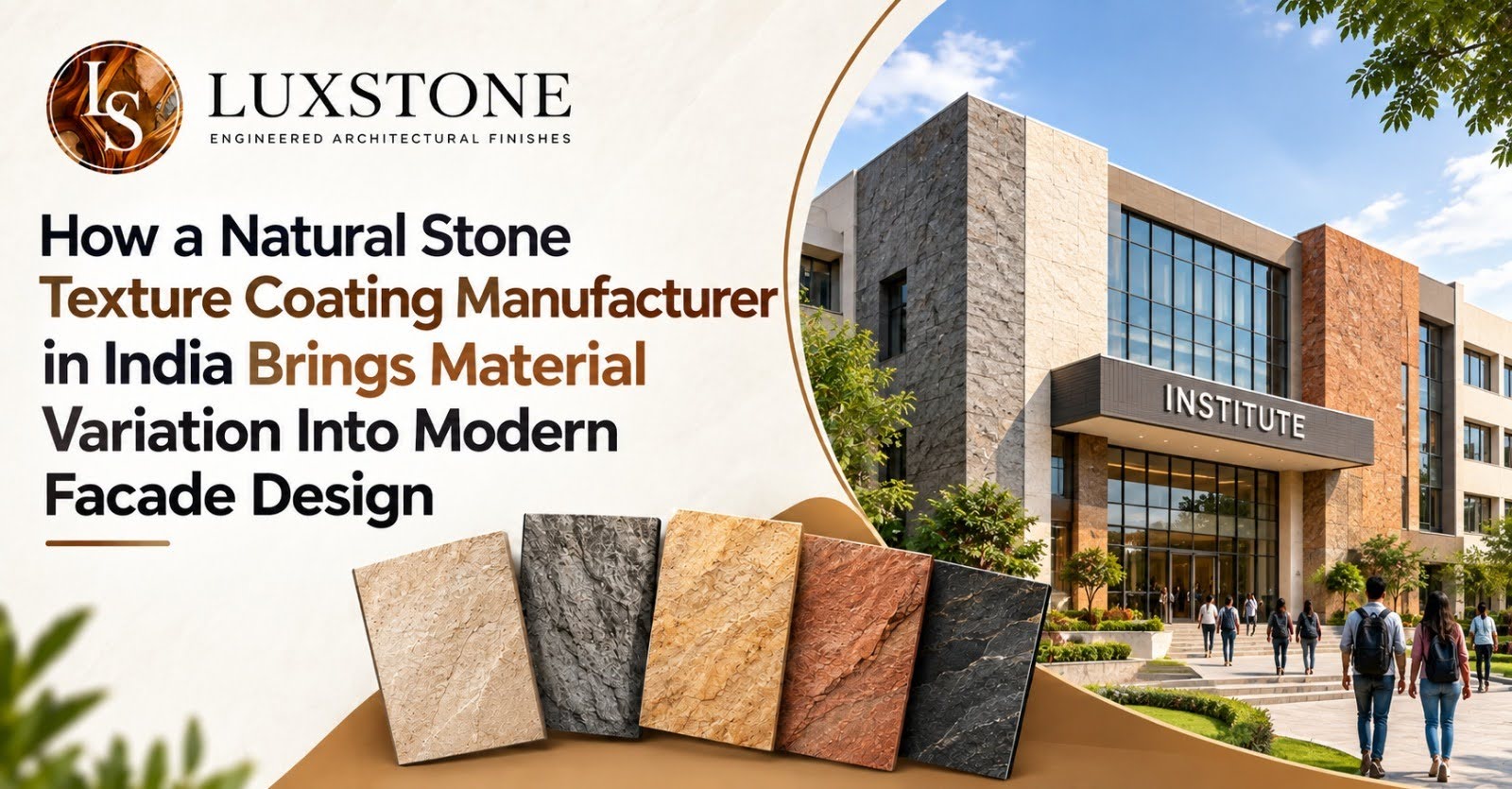
Increasingly, modern facades use material variation to make designs three-dimensional and appealing. A Natural Stone Texture Coating Manufacturer in India can achieve this by adding variation in texture, grain size, surface pattern, and tone using natural stone textures, without relying on natural stone facades alone.
It is thus possible to design a facade that is both natural and elegant enough to fit into modern architecture.
Key Takeaways
- Material variation helps in making modern facades three-dimensional and visually interesting.
- The use of natural stone texture coating makes it possible to vary textures and surface expressions.
- Material variation may be created using different types of stones, grain sizes, application methods, and finishing processes.
- Texture variation of a facade may help designers link big architectural surfaces to surrounding materials.
The Importance of Material Variations in Contemporary Facade Design
Minimalist architecture need not imply the use of only one uniform material. Contemporary facades have a lot of reliance on variations in textures, tones, and finishes to keep the entire elevation from looking flat.
The variation of materials allows the breaking of visual monotony. While some surfaces of a facade are smooth and polished, other parts may have rough and textured surfaces, and some parts may be deeper near entrances and windows. The variations help in creating shadows and a sense of movement, which is even more evident during varying daylight hours.
This is where a Natural Stone Texture Coating Manufacturer in India comes in handy, going beyond a mere decorative wall coating.
How Natural Stone Texture Creates Visual Variation
A Natural Appearance
Natural stone itself is valued for its variation. Even pieces from the same stone category can show differences in grain, particle arrangement, colour, and surface character. Texture coatings inspired by this principle can bring similar visual diversity to facade surfaces.
The variation can come from the type and combination of natural stone particles used in the coating. Marble, granite, and limestone-based particles can create different visual effects depending on their size, distribution, and overall finish.
Instead of creating a perfectly repetitive surface, the material can produce a more organic appearance. This is particularly useful for contemporary facades where designers want clean architectural geometry combined with a natural-looking surface.
Creating Contrast Without Making the Facade Look Busy
One of the challenges in modern facade design is introducing variation without losing visual simplicity.
Too much contrast can make an elevation appear disconnected, while excessive uniformity can make it look flat. Natural stone texture coatings provide an opportunity to work with subtle differences instead.
For example, a designer may use a refined texture across the primary facade and a slightly more pronounced texture around the entrance. Similarly, selected architectural features can receive a different stone tone or surface treatment while the rest of the elevation remains consistent.
This approach creates hierarchy without requiring multiple unrelated materials.
The Role of Grain Size and Texture Depth
The physical appearance of a textured facade is strongly influenced by the size and distribution of stone particles. Fine textures can produce a relatively subtle finish, while larger particles can create stronger visual depth.
Texture depth also influences how light interacts with the wall. Raised particles and uneven surfaces create small shadows that can make a facade appear more dimensional.
A Natural Stone Texture Coating Manufacturer in India can support this design requirement by offering different texture possibilities suited to particular architectural applications. The objective is not simply to make a wall rough or decorative, but to create a surface that works with the proportions, lighting, and geometry of the building.
Material Variation Can Complement Contemporary Architecture
Modern architecture frequently uses materials such as glass, metal, concrete, wood-look surfaces, and stone. A natural stone texture can help connect these contrasting elements.
A textured facade beside large glass panels, for example, can introduce warmth and visual depth. Against metal features, the natural surface can provide a softer contrast. On minimalist concrete-inspired architecture, a stone texture can add character without disrupting the overall geometry.
This makes textured coatings particularly relevant to projects where architects want a balance between modern construction and natural material aesthetics.
Why Customisation Matters for Facade Projects
Not every building requires the same texture or surface appearance. A residential villa may need a warmer and more detailed finish, while a commercial building may benefit from a restrained architectural texture.
Customisation allows designers to consider the building's scale, surrounding environment, architectural style, and intended visual identity.
A Natural Stone Texture Coating Manufacturer in India can contribute to this process by helping project teams explore different patterns, textures, finishes, and stone combinations before finalising the facade treatment.
This is especially valuable for feature elevations where the surface itself is intended to become a major part of the building's identity.
Using Texture to Define Architectural Zones
Material variation can also be used functionally from a design perspective. Instead of treating the entire facade as one continuous surface, architects can use texture to visually separate different zones.
Entrance areas can receive a distinctive finish to create a stronger focal point. Vertical sections can use texture to emphasise the building's height, while horizontal bands can reinforce its proportions. Recessed surfaces can also be given a different texture to increase the perception of depth.
This approach allows the coating to work alongside architectural geometry rather than simply being applied after the design is complete.
What Architects Should Consider Before Selecting a Texture
Environmental Considerations
The right texture should be selected according to both appearance and project requirements. Climate, exposure, surface condition, building scale, maintenance expectations, and surrounding materials all influence the final choice.
Visual Evaluation
It is also important to evaluate how the texture looks under actual daylight rather than relying only on small samples or digital representations. A finish that appears subtle indoors may look significantly different across a large exterior elevation.
Samples and Mock-ups
A physical sample or mock-up can help architects, clients, and contractors assess texture depth, colour variation, and overall compatibility before large-scale application.
Common Mistakes When Introducing Material Variation
Random Decoration
One common mistake is treating variation as random decoration. Effective facade variation should have a clear relationship with the building's architectural composition.
Ignoring Surface Conditions
Another issue is selecting textures based only on appearance without considering the surface on which they will be applied. Exterior walls experience sunlight, rain, dust, and temperature changes, so the coating needs to be appropriate for the intended application.
Overusing Textures
Using too many textures can also weaken the design. In most contemporary projects, a controlled combination of one or two complementary finishes can create a stronger visual result than excessive variation.
Why Manufacturer Expertise Matters
The quality of a textured facade depends not only on the material but also on consistency, application guidance, and the ability to achieve the intended finish across larger surfaces.
Working with an experienced Natural Stone Texture Coating Manufacturer in India allows architects and project teams to discuss texture requirements before application. This can help align the selected material with the project's aesthetic goals and practical conditions.
For larger projects, manufacturer support can also be useful when determining suitable finishes, preparing samples, and maintaining consistency across different facade areas.
A More Natural Approach to Modern Facades
The growing interest in material variation reflects a broader shift in contemporary architecture. Designers are looking beyond completely uniform painted surfaces and exploring finishes that provide depth, tactility, and a stronger connection with natural materials.
Natural stone texture coatings fit into this direction by combining the visual character of stone particles with the flexibility of a coating-based facade finish. They can be adapted to different architectural expressions while helping create surfaces that feel more layered and distinctive.
For architects, builders and homeowners looking to create modern facades with a natural visual identity, choosing the right material partner is therefore an important part of the design process.
Frequently Asked Questions
Final Thoughts
Material variation allows modern facades to move beyond flat, repetitive surfaces while maintaining a clean architectural appearance. Through natural stone particles, controlled texture, tonal differences and customised finishes, designers can introduce depth without compromising the simplicity of contemporary architecture.
For projects where aesthetics, durability and natural material character need to work together, Luxstone Texture provides natural stone-based texture solutions designed for modern interior and exterior applications. Choosing the right Natural Stone Texture Coating Manufacturer in India can ultimately help transform a facade from a simple exterior surface into a more distinctive part of the building's overall architectural identity.