
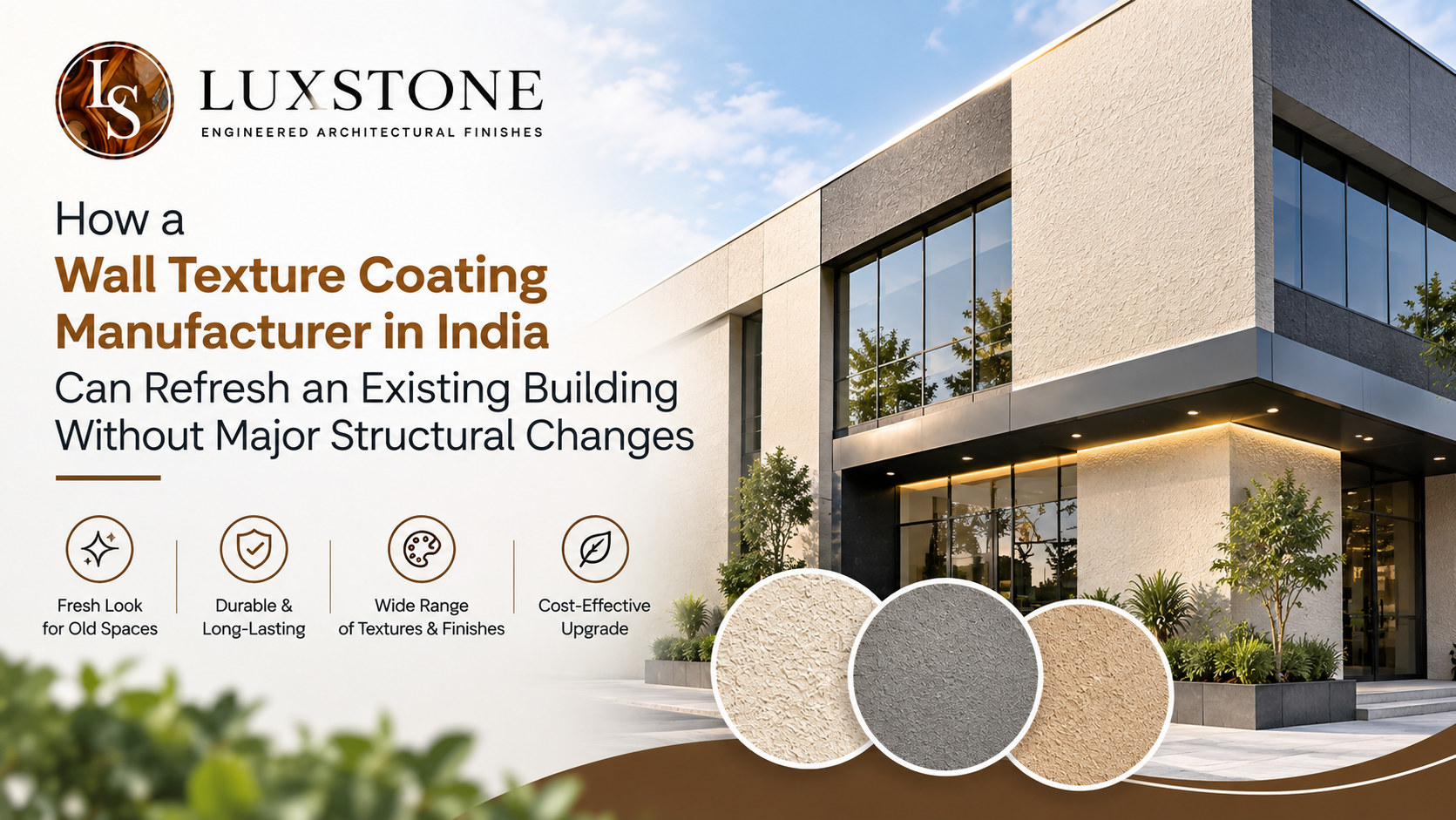
A refreshing of an existing building does not always require structural changes. I have seen that a good textured wall coating can change how old walls look, add depth and a natural material feel, and make the facade more modern while keeping the structure.
A Wall Texture Coating Manufacturer in India can help by giving texture choices, natural stone finishes, guidance on application, and solutions that fit different renovation needs. I find this very useful.
For property owners, architects, and contractors, this method can make facade improvement easier while letting the original building shape stay mostly the same. I think this approach is practical.
Key Takeaways
- Wall texture can change the look of an existing building without altering its structure. I have seen this work well.
- Textured finishes can hide visual flaws after the right surface preparation. I find this very useful.
- Natural stone textures add depth and architectural character to facades. I love the look.
- Different textures and finishes can help modernise residential and commercial buildings. I think this gives a sense of place.
- Proper surface assessment and application are essential to get a durable, consistent finish. I have learned this from experience.
Why Existing Buildings Often Need a Visual Refresh
Buildings can keep working even if their outside looks old. Constant exposure to sunlight, rain, dust, humidity, and temperature changes can slowly damage finishes. Older paint may fade, stain, or lose its appeal. Plain walls can also make a building look dated even if the underlying structure still works.
This is where renovating the facade with surface treatments can help. Instead of removing walls or changing the building's shape, property owners can focus on improving the surface finish. I think a textured coating adds a visual layer while letting the existing structure stay largely intact.
How Wall Texture Can Change an Existing Facade
Texture changes how a wall interacts with light. Unlike a completely smooth painted surface, a textured finish creates variations in depth and shadow that can make the facade appear more detailed.
This can be especially effective on large blank walls. A natural stone-inspired texture can give these areas greater visual weight while creating a more sophisticated architectural appearance.
A Wall Texture Coating Manufacturer in India can provide different texture styles, surface effects, and finish options, allowing renovation teams to select a solution according to the building's existing design.
The objective is not necessarily to make the facade dramatically different. In many projects, subtle texture can be enough to make an older building look more contemporary.
Refreshing the Building Without Changing Its Structure
One of the biggest advantages of surface-level facade renovation is that it focuses on the building envelope rather than major structural modifications.
Existing walls, openings, and architectural proportions can remain in place while the surface appearance is updated. This can be particularly relevant for properties where structural changes are unnecessary or where owners want to minimise disruption.
For example, a plain exterior wall can receive a natural stone texture finish, while selected architectural sections can use a complementary texture or finish. The result can create a new visual identity without changing the building's basic form.
However, texture coating should not be viewed as a solution for structural defects. Significant cracks, structural deterioration, or persistent moisture problems should be assessed and addressed separately before decorative finishing work begins.
Using Natural Stone Texture for a More Premium Appearance
Natural stone has long been associated with architectural character and visual depth. Natural stone-based texture coatings can bring some of this surface character to existing walls.
Materials incorporating natural marble, granite, or limestone chips can create variations in grain and texture. These details can make a facade appear more substantial than a conventional smooth paint finish.
For renovation projects, this approach can be particularly useful when the design goal is to create a premium appearance without introducing extensive cladding or altering the underlying building structure.
Choosing Texture According to Building Design
The right texture should complement the architecture rather than simply cover the entire building with a decorative surface.
A contemporary commercial building may benefit from a restrained texture that works alongside glass and metal. A residential property may use a warmer stone-inspired finish to create a more welcoming exterior.
Feature areas can also receive a more pronounced texture while secondary surfaces remain comparatively subtle. This creates visual hierarchy and prevents the renovation from appearing overly decorative.
A Wall Texture Coating Manufacturer in India can help project teams explore available textures and finishes before selecting the most suitable option.
Improving Large Plain Exterior Surfaces
Large blank walls can be one of the most challenging elements of an existing facade. Even when the wall is structurally sound, its flat appearance can make the building look unfinished or outdated.
Texture introduces surface variation that breaks up visual monotony. Depending on the desired result, designers can use a fine, moderate, or more pronounced texture.
Vertical and horizontal architectural elements can also be highlighted through changes in texture or finish. This can make existing proportions more noticeable without requiring construction work.
The Importance of Surface Preparation
A new texture cannot compensate for an unstable or poorly prepared wall.
Before application, the existing surface should be inspected for loose material, dirt, cracks, old coatings, and moisture-related issues. Appropriate cleaning and preparation should be carried out according to the selected product requirements.
This step is particularly important in renovation projects because older buildings may have accumulated multiple layers of paint or other surface treatments.
Proper preparation creates a more suitable base for the new coating and helps achieve a more uniform final appearance.
How Texture Can Support Different Renovation Budgets
Building renovation does not always happen with the same scope or budget. Some owners may want to refresh only the front elevation, while others may plan improvements across the entire property.
Texture coatings can be incorporated at different scales. A project may focus on entrance areas, feature walls, selected facade sections, or complete exterior elevations.
This flexibility allows renovation teams to develop a surface treatment plan according to the building's priorities rather than treating every wall in exactly the same way.
The final cost and suitability will depend on the surface condition, area, selected product, preparation requirements, and application method.
Renovating Commercial and Residential Buildings
The same basic principle can be applied across different property types, although the design priorities may differ.
For commercial buildings, facade texture can help create a more contemporary and distinctive exterior that aligns with the property's identity. Offices, retail spaces, and hospitality properties can use texture to strengthen entrance areas and architectural features.
For residential buildings, textured finishes can create a more refined exterior while helping homeowners update an older facade without undertaking extensive construction.
Institutional and other architectural properties can similarly use controlled texture variation to improve large exterior surfaces.
Common Mistakes to Avoid
Choosing a texture without considering the existing architecture is one common mistake. The finish should complement the building's proportions, materials, and surroundings.
Another mistake is applying texture before addressing surface defects. Cracks, unstable areas, and moisture problems should be assessed before decorative work begins.
Using too many different finishes can also make the facade appear visually inconsistent. A controlled combination of complementary textures is usually easier to integrate into an existing building.
Finally, property owners should not evaluate a coating solely from a small indoor sample. Large exterior surfaces can look different under natural daylight, making physical facade mock-ups valuable for important renovation projects.
Why Manufacturer Support Matters
Selecting the right material is only one part of a successful renovation. Application requirements, surface preparation, and finish consistency also influence the final result.
A Wall Texture Coating Manufacturer in India can provide product information, texture choices, and application recommendations that help architects and contractors plan the work more effectively.
For larger projects, manufacturers can also support sample development and material planning. This becomes particularly useful when multiple facade sections need to maintain a consistent appearance.
A Practical Approach to Building Refresh
A successful facade refresh can follow a straightforward process. First, assess the existing building and identify areas requiring repair or preparation. Next, establish the desired architectural appearance and select suitable textures and finishes.
A physical sample or mock-up can then be reviewed under actual lighting conditions. Once the finish is approved, the surface can be prepared and the coating applied according to the product requirements.
This approach allows the renovation to focus on visual transformation while keeping major structural changes outside the scope of the project.
Final Thoughts
Refreshing an existing building does not necessarily mean changing its structure. With the right surface treatment, plain or ageing walls can gain new depth, texture and architectural character while the existing building form remains largely unchanged.
For architects, contractors and property owners, working with an experienced Wall Texture Coating Manufacturer in India can simplify the process of selecting suitable finishes and planning their application.
Luxstone Texture offers natural stone-based texture solutions for interior and exterior applications, helping existing buildings achieve a refreshed and distinctive surface appearance without relying on major structural alterations.