
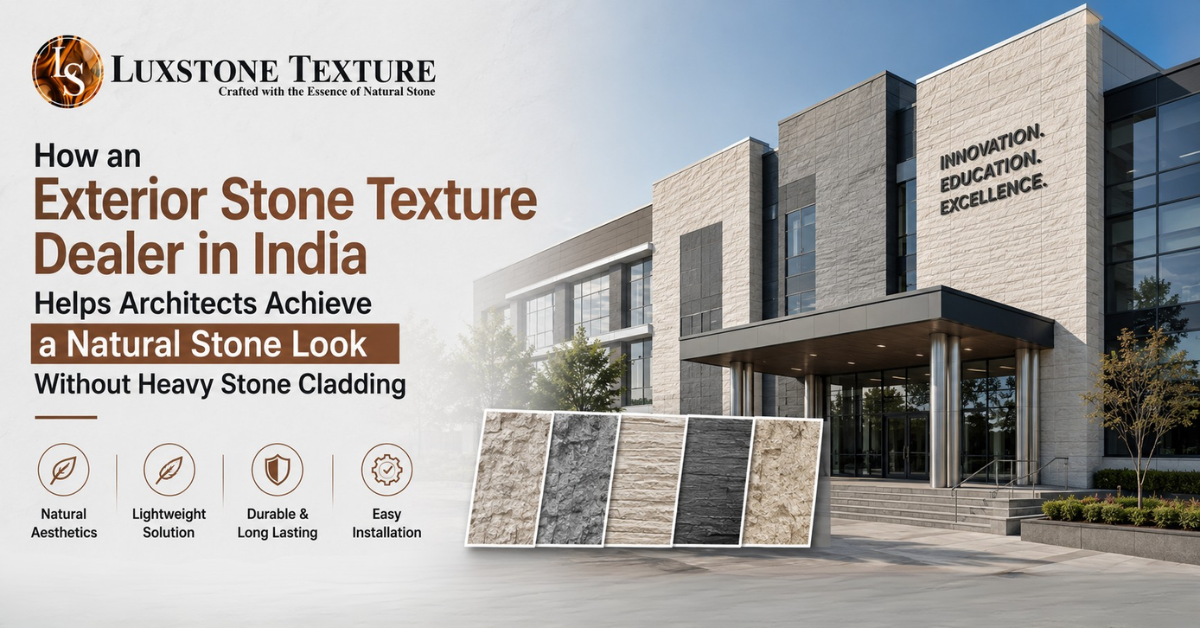
An exterior stone texture dealer in Delhi NCR helps architects get the look of stone without using heavy stone cladding on the facade. These dealers offer stone-textured coating systems that bring the depth, colour variation, and natural character of real stone. The result is an appearance with fewer structural demands and easier installation.
These coating solutions give architects freedom in design. They can pick colours, textures, and patterns to match the vision for a building. They can also mix aggregates to create unique surface effects. Unlike stone cladding, which covers the whole facade, textured coatings can be used selectively or over large areas with much less weight.
The benefit goes beyond just replacing one material with another. It's about delivering the architectural expression. This means balancing how a building looks with how it performs on the surface, how it is installed, how easy it is to maintain, and how practical it is for the project overall.
Important points to remember:
- Stone texture coatings can look like stone without covering the entire building with real stone slabs.
- Architects have flexibility to choose colours, textures, patterns, and aggregate mixes that fit the design idea.
- Compared to cladding, these coatings provide a lighter, more adaptable method for designing and building facades.
- Local dealers in Delhi NCR can help with product selection, checking availability, offering application advice, and supporting the project at every stage.
- Choosing the coating product and a skilled applicator is key to making sure the finish lasts long and stays consistent across the surface.
What Is an Exterior Stone Texture Dealer in Delhi NCR?
An exterior Stone texture Dealer in Delhi NCR supplies stone-textured coating materials designed for exterior architectural applications. These products can contain natural mineral aggregates such as marble, granite, or other stone particles that create a textured surface once properly applied.
The objective is to achieve a finish that has the visual character of natural stone while being applied as a coating system rather than installed as individual stone pieces.
For architects, this creates another option when developing facades. Instead of specifying conventional stone cladding for every exterior surface, they can use a textured finish selectively or across larger areas depending on the design requirements.
A dealer's role can extend beyond supplying the material. In project-driven construction, architects and contractors may also need information about suitable substrates, finish options, application methods, quantities, and product availability.
Why Are Architects Looking Beyond Heavy Stone Cladding?
Natural stone has always had a strong position in architecture because of its texture, colour variation, and association with premium construction. However, using substantial stone cladding across an entire building can introduce additional considerations.
The project team may need to account for material handling, installation, detailing, structural requirements, transportation, wastage, and the overall construction process.
This does not make natural stone cladding unsuitable. It simply means that it is not necessarily the most practical solution for every facade.
Stone texture coatings provide architects with an alternative design route. They can reproduce the visual language of stone while allowing the facade to be treated as a textured surface rather than a collection of individually installed stone units.
For projects in and around Delhi NCR, working with an exterior Stone texture Dealer in Delhi NCR can also make sourcing and project coordination more convenient.
How Does Stone Texture Create a Natural Stone Look?
The Role of Natural Aggregates
The visual character of a stone texture comes largely from the materials incorporated into the coating. Natural aggregates can introduce variations in colour, grain, and surface appearance that are difficult to achieve with a conventional smooth paint.
Marble and granite particles, for example, can create a more authentic mineral appearance while adding physical texture to the wall.
Creating Depth Instead of a Flat Painted Surface
A major difference between ordinary exterior paint and stone texture is the way the surface responds visually.
Paint generally creates a relatively uniform layer of colour. A textured coating introduces variation, allowing light and shadow to interact with the surface.
This gives a facade greater depth and can make large exterior walls appear more architecturally interesting.
Matching the Texture to the Design
Architects can use different textures strategically rather than treating every wall identically.
A villa may use a pronounced stone texture around the entrance while keeping other walls more understated. A commercial building may use textured sections to frame entrances, columns, or architectural projections.
This approach allows the natural stone effect to become part of the overall design language.
Key Factors Architects Should Consider Before Choosing a Stone Texture
- Architectural Style: The texture should support the building's architectural character. Contemporary projects may benefit from restrained textures and neutral tones, while luxury residences may accommodate richer stone-inspired finishes.
- Colour and Aggregate Selection: The colour of the aggregate affects the overall visual impression. Architects should evaluate samples under natural lighting rather than relying exclusively on digital representations.
- Substrate Condition: A textured finish performs best when applied over a properly prepared substrate. Cracks, loose material, dust, moisture, and other surface problems should be addressed before application.
- Weather Exposure: Exterior facades experience sunlight, rain, humidity, dust, and temperature variations. Product suitability should therefore be evaluated according to the project's location and environmental exposure.
- Application Expertise: A high-quality material cannot compensate for poor preparation or inconsistent application. Architects should consider whether trained applicators are available for the project.
Benefits of Choosing Stone Texture Instead of Extensive Cladding
A Natural Appearance With Greater Design Flexibility: Stone texture allows architects to create a stone-inspired aesthetic while working with a coating system. Different combinations of texture and colour can be used to create customised facade treatments.
Potentially Simpler Material Handling: Instead of handling numerous individual stone pieces, a coating system is applied directly to the prepared wall surface. This can change the logistics and workflow involved in the facade finishing process.
Consistent Architectural Treatment: Large areas can be treated as part of a continuous finish, allowing architects to create a unified appearance across sections of a building.
Suitable for More Than Luxury Villas: The application is not restricted to residential architecture. Stone textures can also be considered for offices, hospitality properties, retail spaces, institutional buildings, boundary walls, and other exterior applications.
Reduced Dependence on a Single Cladding Material: Using a combination of finishes can make a facade more visually dynamic. Stone texture can be paired with glass, metal, concrete, wood-inspired elements, or smooth painted surfaces to create contrast.
Common Mistakes and Challenges
Treating Texture as a Direct Replacement for Structural Stone: A stone texture coating recreates the appearance and surface character of stone; it does not have the same structural or physical properties as a solid stone slab. Architects should therefore select the solution according to the actual purpose of the facade element.
Choosing From a Small Sample Alone: A small sample may look different when applied across a large wall. Texture, aggregate distribution, lighting, and viewing distance can all influence the final appearance.
Ignoring Surface Preparation: Existing cracks, loose plaster, dampness, and contamination can affect adhesion and finish quality. Surface preparation should be treated as part of the specification, not as an optional step.
Selecting Only on Price: The lowest material cost does not necessarily represent the lowest project cost. Application requirements, wastage, durability, maintenance, and consistency should also be considered.
How to Choose the Right Exterior Stone Texture Dealer
Choosing an exterior Stone texture Dealer in Delhi NCR should involve more than checking whether a dealer stocks the required product.
Architects and project teams should assess the supplier's ability to support the project from material selection through application.
- Review Product Options: Ask for physical samples, available colours, texture variations, aggregate options, and technical specifications.
- Understand Application Requirements: Clarify substrate preparation, recommended tools, coverage, drying conditions, and application procedures before finalising the specification.
- Check Project Support: For larger projects, consistent supply and timely availability can be just as important as product quality.
- Discuss the Actual Application: A reliable dealer should be able to explain whether the selected texture is appropriate for the intended exterior surface and environmental conditions.
- Evaluate the Manufacturer Behind the Product: The dealer is only one part of the supply chain. Architects should also consider the manufacturer's quality standards, product consistency, technical documentation, and after-sales support.
Expert Perspective / Practical Insight
The most effective way to use stone texture is to treat it as an architectural material rather than simply another type of paint.
Architects can use texture strategically to direct attention, define building zones, and create visual hierarchy. For example, a darker stone texture around the entrance can make the entry point more prominent, while a lighter finish on the primary facade can maintain an open and contemporary appearance.
It is also useful to test the proposed finish on a larger mock-up before full-scale application. This allows the architect and client to assess colour, texture density, aggregate distribution, and appearance under actual site lighting.
An experienced exterior Stone texture Dealer in Delhi NCR can be valuable during this stage by helping the project team understand available finishes and application considerations before the final specification is approved.
Frequently Asked Questions
Can stone texture replace natural stone cladding?
Stone texture can provide a natural stone-inspired appearance, but it is not structurally equivalent to stone cladding. The appropriate option depends on the architectural and performance requirements of the project.
Is stone texture suitable for exterior walls?
Yes. Products specifically formulated for exterior applications can be used on suitable exterior wall surfaces. The product should be selected according to the substrate and environmental exposure.
Does stone texture require more maintenance than natural stone?
Maintenance requirements depend on the specific product, installation quality, environmental exposure, and building conditions. Proper application and routine inspection remain important for any exterior finish.
Can architects customise the colour of a stone texture?
Many stone texture systems are available in different colour and aggregate combinations. The available level of customisation depends on the product and manufacturer.
How important is surface preparation?
Surface preparation is critical. The wall should be sound, clean, appropriately dry, and free from loose material or unresolved defects before the texture is applied.
What should I ask an exterior stone texture dealer before buying?
Ask about product specifications, suitable substrates, available finishes, coverage, application requirements, weather suitability, sample availability, supply capacity, and technical support.
Final Thoughts
For architects, the appeal of stone texture lies in its ability to bring the visual richness of natural stone into facade design without necessarily relying on extensive heavy cladding. It provides another material language for creating depth, contrast, and character across residential and commercial architecture.
The right exterior Stone texture Dealer in Delhi NCR can make that process easier by connecting architects and project teams with suitable products, samples, technical information, and application support.
For projects where aesthetics, durability, and practical execution all need to work together, Luxstone Texture provides natural stone texture solutions designed for architectural applications. Exploring the right texture early in the design process can help architects develop facades that achieve a sophisticated stone-inspired appearance while remaining aligned with the project's practical requirements.