
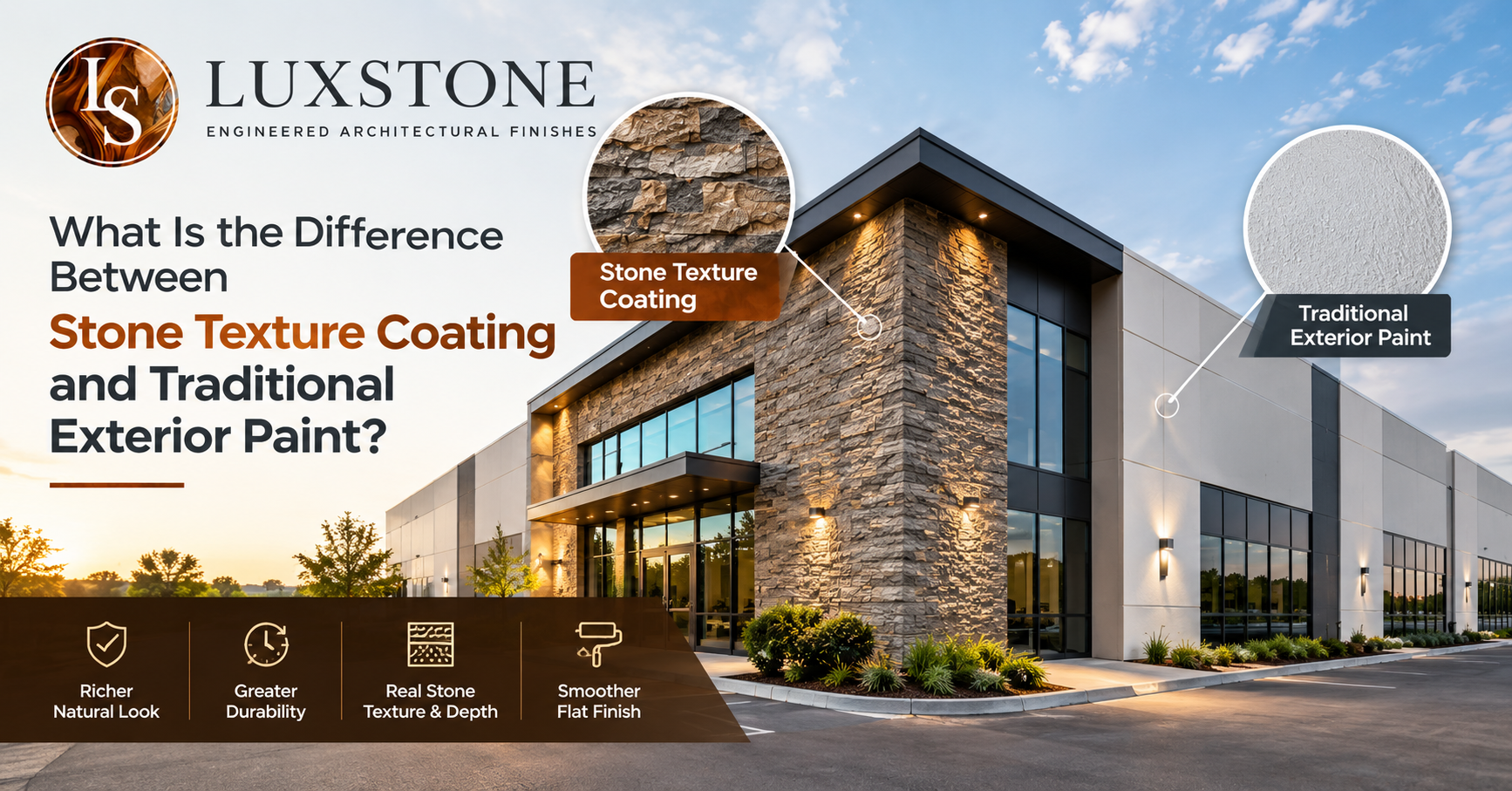
Even though Stone Texture Coating and traditional paint are both suitable for finishing exterior walls, they serve completely different purposes. While traditional paint is basically a means of adding color and protecting the surface, Stone Texture Coating gives the surface additional texture, dimension, and even the look of natural stone, besides offering protection.
A Natural Stone Texture Coating Supplier in India would supply coating materials that contain natural stone particles like marble, granite, limestone, etc., which give an extra-dimensional look to the exterior surfaces compared to the regular paint surface finish. I find this very useful.
For property owners, architects, and contractors, this method can make facade improvement easier while letting the original building shape stay mostly the same. I think this approach is practical.
Key Takeaways
- Traditional exterior paint basically finishes the surface with a colored smooth or textured finish.
- Stone Texture Coating not only colors but gives a more textured surface finish as well.
- Natural stone particles may add variation and dimension and give a stone-like finish to the surface.
- Texture makes large surfaces aesthetically richer and more architectural.
- Proper surface assessment and application are essential to get a durable, consistent finish. I have learned this from experience.
What is Traditional Exterior Paint?
Traditionally, exterior paints are manufactured in order to give buildings color as well as offer a layer that protects exterior surfaces. Depending on the type, the paint can be utilized to provide protection against environmental damage as well as increase the aesthetics of the exterior walls.
These paints come in various shades and finishes such as matt, satin, and many others. The paint can be applied to the exterior walls of homes, offices, and any other structure. I think a textured coating adds a visual layer while letting the existing structure stay largely intact.
What Is Stone Texture Coating?
Stone texture coating is a textured wall finish designed to create a more natural, dimensional surface. Depending on the product, it can incorporate natural stone particles such as marble, granite, or limestone.
These particles contribute to the visual character of the finished wall. Instead of appearing as a uniform painted surface, the facade can show variations in grain, texture, and depth.
A Natural Stone Texture Coating Supplier in India can offer different texture and finish options for exterior applications, allowing architects and property owners to select a surface that complements the building's architectural style.
The objective is not necessarily to make the facade dramatically different. In many projects, subtle texture can be enough to make an older building look more contemporary.
Stone Texture Coating vs Traditional Exterior Paint
The most noticeable difference is the appearance of the finished wall.
Traditional paint generally creates a relatively uniform surface in the selected colour. Stone texture coating introduces visible particles and surface variation, creating greater depth.
The second difference is the design role of the material. Paint is often selected primarily for colour, whereas stone texture can contribute to both colour and architectural texture.
The third difference is how the surface interacts with light. A smooth painted wall reflects light more evenly, while a textured wall creates highlights and shadows across its uneven surface.
Difference in Appearance and Visual Depth
For a simple exterior refresh, traditional paint may be sufficient. It can change the colour of the building and provide a clean appearance.
However, facades with large blank walls may benefit from additional surface character. Stone texture coating can create a more substantial appearance by adding grain and texture.
This difference can be particularly noticeable on villas, commercial buildings, entrance walls, feature elevations, and other architectural surfaces where the facade is an important part of the property's visual identity.
Difference in Material Composition
Traditional exterior paints are generally formulated using binders, pigments, solvents or water, and other additives required for the intended coating performance.
Stone texture coatings can incorporate natural stone particles into a coating system. Natural marble, granite, and limestone particles can contribute to the surface's texture and appearance.
The specific composition varies by manufacturer and product. Therefore, architects and contractors should always review the technical specifications of the selected material before application.
Difference in Texture and Surface Character
Texture is one of the clearest distinctions between the two finishes.
A conventional exterior paint application generally produces a smooth or relatively uniform surface. Stone texture coating, by contrast, is designed to create a more tactile finish.
The level of texture can vary depending on the particle size, application technique, and selected product. Fine textures can create a subtle stone effect, while more pronounced textures can produce stronger visual depth.
This flexibility allows textured coatings to be used for both understated and more prominent facade designs.
Difference in Facade Design Possibilities
Traditional paint offers extensive colour choices, making it useful when colour is the primary design consideration.
Stone texture coating expands the design possibilities by combining colour and surface texture. Designers can use different finishes to distinguish entrance areas, feature walls, columns, or other architectural elements.
A Natural Stone Texture Coating Supplier in India can also help project teams explore different finishes and textures before selecting a suitable option for the building.
This makes texture coating particularly relevant to modern facades where designers want to introduce material variation without relying exclusively on conventional cladding.
Difference in Maintenance Considerations
Both exterior paint and stone texture coating require appropriate surface preparation and maintenance. Neither should be treated as completely maintenance-free.
Traditional painted surfaces may eventually require cleaning, touch-ups, or repainting depending on exposure and product performance.
Textured coatings also need appropriate maintenance, although their textured appearance may interact differently with minor surface marks and everyday visual wear.
Maintenance requirements depend on the specific product, application quality, environmental conditions, and exposure of the building. Product specifications should therefore be considered before making a selection.
Difference in Application
Traditional exterior paint can typically be applied using methods such as rollers, brushes or spray equipment, depending on the product.
Stone texture coatings may require specific application equipment and techniques to achieve the intended texture consistently. The application process can therefore require greater attention to surface preparation, material handling and finish uniformity.
This is one reason manufacturer or applicator guidance can be useful for larger facade projects.
Which One Is Better for a Modern Facade?
There is no single option that is suitable for every building. The choice depends on the design objective and practical requirements.
Traditional exterior paint may be appropriate when the project primarily needs a clean, uniform colour change. Stone texture coating may be more suitable when the design calls for depth, natural material character, and a more distinctive surface.
For a contemporary facade, textured coating can also be combined strategically with smooth painted surfaces. This allows designers to create contrast without covering every part of the building in the same finish.
What Should You Consider Before Choosing?
Before selecting a finish, consider the building's existing architecture, wall condition, climate, exposure, desired appearance, and maintenance expectations.
For renovation projects, the condition of the existing wall is particularly important. Cracks, loose material, dampness, or unsuitable previous coatings should be addressed before applying a new finish.
It is also useful to request a physical sample or mock-up. A texture that appears subtle in a small sample may look considerably different when applied across a large facade.
Why Choosing the Right Supplier Matters
The final appearance of a textured facade depends on more than the material itself. Product consistency, application guidance, and suitable finish selection can all influence the outcome.
Working with an experienced Natural Stone Texture Coating Supplier in India can help architects, contractors and property owners understand the available options and identify a finish suited to their project.
For larger applications, discussing samples, surface preparation and application requirements in advance can help reduce inconsistencies during installation.
Frequently Asked Questions
Is stone texture coating the same as exterior paint?
No. Both are used as exterior wall finishes, but stone texture coating is specifically designed to create a more textured, dimensional, and stone-inspired surface.
What makes natural stone texture coating different?
Natural stone texture coatings can incorporate natural stone particles such as marble, granite, or limestone, depending on the product. These particles contribute to the texture and visual variation of the finished surface.
Can stone texture coating be used instead of exterior paint?
It can be considered an alternative exterior wall finish when the project requires a textured or natural stone-inspired appearance. Suitability depends on the wall surface, product specifications, and application requirements.
Is stone texture coating suitable for modern buildings?
Yes. Textured finishes can complement contemporary architecture by adding depth to large surfaces and creating contrast with materials such as glass, metal, and smooth painted walls.
Does textured coating require special application?
Some stone texture coatings require specific application methods or equipment. The manufacturer's application instructions should be followed to achieve the intended texture and finish.
How should I choose between paint and stone texture coating?
Consider whether the project primarily needs a uniform coloured surface or a more dimensional architectural finish. Surface condition, climate exposure, maintenance requirements, and overall design should also influence the decision.
Final Thoughts
Traditional exterior paint and stone texture coating can both play useful roles in building design, but they create distinctly different surface experiences. Paint generally focuses on colour and a uniform finish, while stone texture coating combines colour with texture, depth, and natural material character.
For projects seeking a more distinctive facade appearance, working with an experienced Natural Stone Texture Coating Supplier in India can help simplify product selection and application planning.
Luxstone Texture offers natural stone-based texture solutions using materials such as marble, granite and limestone for interior and exterior applications, helping architects, builders and property owners create textured surfaces suited to contemporary architectural designs.