
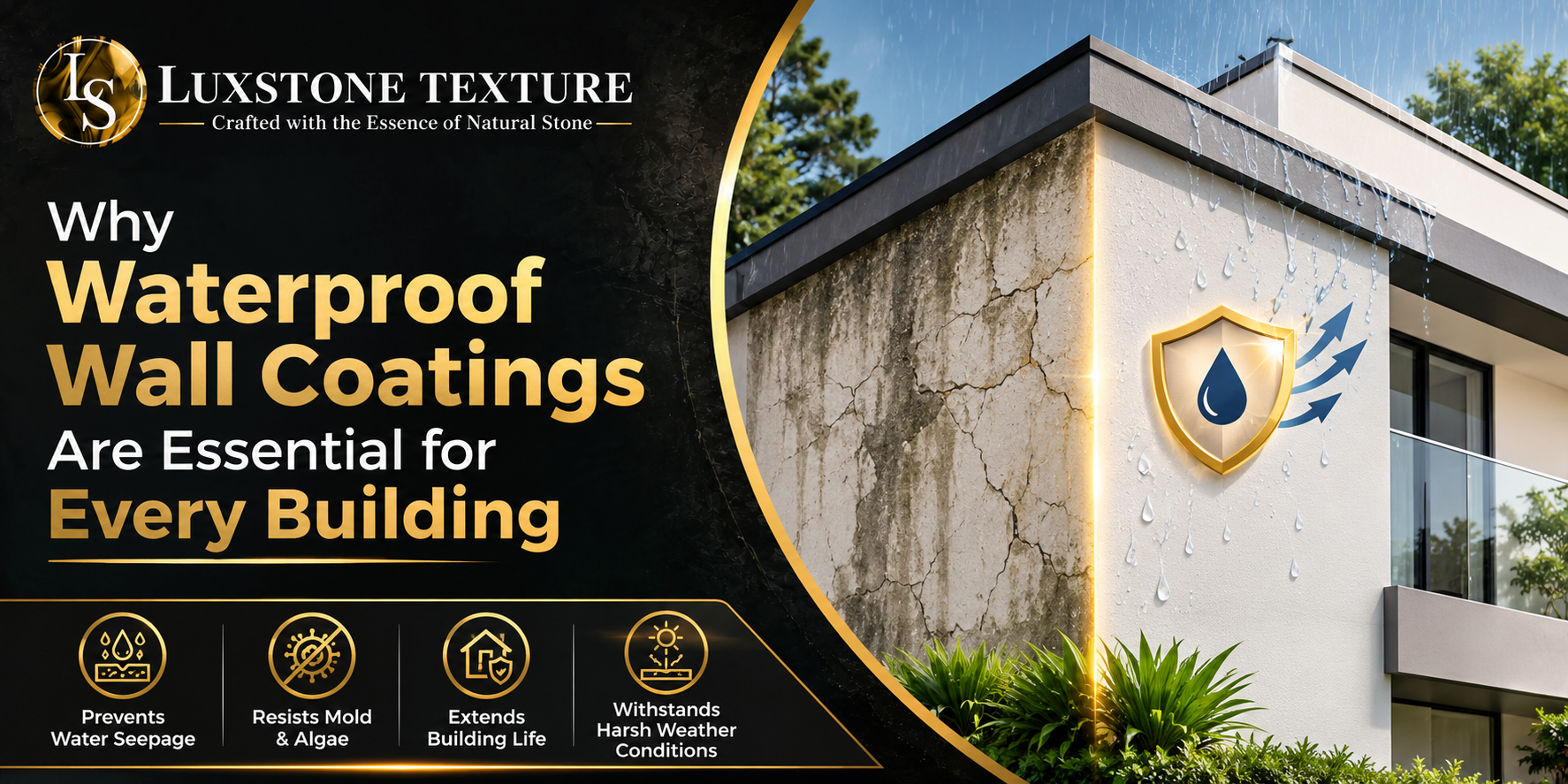
Why Waterproof Wall Coatings Are Essential for Every Building
A recently constructed building can have an immaculate façade, with its fresh finishing and choice of colors. However, for this façade, the true test lies ahead, once the first monsoon sets in.
The rainwater falls upon the façade over and over again. The humidity levels are high. Water begins to seep into the cracks and weak spots. Eventually, the effects will appear as damp spots, flaking, and other issues.
This is not merely a cosmetic problem for the property owners; it can raise their maintenance costs and affect the general state of the property. This is the reason why wall coatings are getting more attention as a protective measure for buildings.
Properly chosen architectural wall coatings in India can serve both practical and aesthetic purposes, helping exterior surfaces withstand environmental impact and adding to the architecture of the building.
Why Wall Coatings Matter More in Modern Construction
The use of finishes on exterior walls has changed. It used to be common practice to choose a coating mainly due to its appearance and color. In modern times, there has been an increased tendency to pay attention to what goes on after construction.
Several specific conditions in India make it difficult for exterior walls to perform well. These include strong sunlight, heavy rains during monsoons, humidity, pollution, dust, and wide fluctuations in temperatures.
All these factors can have a slow but definite effect on the walls of a building. The coating that looks good when applied may not be able to give similar results in a few years due to environmental effects.
This has resulted in more and more use of coating materials that are both decorative and durable. Architectural Wall Coatings Material in India is significant in this context, as modern coating materials can now be chosen based on location, surface needs, design goals, and exposure.
This can be seen in luxury housing, commercial, and hospitality buildings.
What Makes a Good Architectural Wall Coating?
Professionals do not generally select wall coatings based on appearance alone. The suitability of a product depends on the surface, environmental conditions, application area, and performance expectations.
Before a coating is applied, the condition of the substrate should be assessed. Cracks, loose plaster, existing coating failure, biological growth, or moisture caused by plumbing and structural issues should be addressed first.
This is an important distinction. A coating can provide an additional protective layer, but it cannot correct an unresolved plumbing leak or structural defect.
When evaluating Architectural Wall Coatings Material in India, professionals may consider factors such as:
- Moisture resistance
- Weather resistance
- Adhesion
- UV exposure
- Flexibility
- Surface durability
- Maintenance requirements
- Compatibility with the substrate
- Recommended application conditions
Application quality is equally important. Proper cleaning, preparation, crack treatment, drying, and application according to the manufacturer's specifications can influence how effectively a coating performs.
How Do Architectural Wall Coatings Help Protect Buildings?
One of the primary functions of a protective exterior coating is to help manage the effects of environmental exposure.
Exterior walls are continuously exposed to rain, humidity, sunlight, dust, and pollution. Over time, repeated exposure can contribute to staining, surface deterioration, peeling, and other forms of finish failure.
A suitable coating can provide an additional protective layer over the prepared surface. Depending on its formulation and intended application, it may help reduce moisture interaction and improve resistance to weather-related wear.
This makes Architectural Wall Coatings Material in India particularly relevant for buildings where long-term exterior performance is a priority.
However, the term "waterproof" should not be interpreted as a guarantee against every possible source of water ingress. Building design, drainage, roof detailing, plumbing, substrate quality, and regular maintenance remain important parts of moisture management.
Why Are Waterproof Wall Coatings Important for Indian Buildings?
India's monsoon season makes moisture protection a particularly important consideration for many properties.
During periods of heavy rainfall, exterior walls may remain exposed to water for extended periods. In coastal areas, humidity and salt exposure can introduce additional challenges. In cities, pollution and dust can further affect the appearance of facades.
Architectural wall coating materials in India can be selected to address specific environmental requirements while also meeting the visual expectations of the project.
For example, a residential building in a high-rainfall region may require a different exterior coating approach from a property in a dry climate. Similarly, a coastal building may require careful consideration of environmental exposure when selecting its exterior finish.
The lesson is simple: the best coating is not necessarily the most expensive one. It is the one suited to the building's actual conditions.
What Problems Can Occur Without Proper Exterior Wall Protection?
Moisture-related deterioration often develops gradually.
A property owner may initially notice a small stain or patch of peeling paint. Repainting can temporarily improve the appearance, but if the underlying source of moisture remains unresolved, the problem may return.
Over time, repeated exposure can contribute to:
- Peeling and blistering
- Surface staining
- Efflorescence
- Deterioration of exposed finishes
- Recurring repainting requirements
- Poor exterior appearance
For this reason, simply repainting a wall whenever damage becomes visible may not always be the most effective approach.
A more practical strategy is to identify the source of the problem, repair underlying defects, prepare the surface properly, and then select a suitable protective finish.
Architectural Wall Coatings vs Conventional Exterior Paint
Not every building requires a specialised coating, and conventional exterior paint still has an important place in construction and renovation.
The difference lies primarily in the intended purpose and performance requirements.
| Factor | Conventional Exterior Paint | Architectural Wall Coatings |
|---|---|---|
| Primary purpose | Colour and decorative finishing | Protection and architectural finishing |
| Moisture performance | Depends on formulation | Can be specifically formulated for moisture resistance |
| Design possibilities | Primarily colour-based | Can include textures and specialised finishes |
| Weather performance | Varies by product | Selected according to intended environmental exposure |
| Maintenance | Depends on product and conditions | Can support longer-lasting surface performance |
| Architectural impact | Moderate to high | Can provide enhanced depth and texture |
For a simple residential repainting project, conventional exterior paint may be entirely appropriate. For a premium facade where durability, texture, moisture resistance, and architectural appearance all matter, a specialised coating system may offer greater value.
How Can Architectural Wall Coatings Improve Building Appearance?
Protection does not have to come at the expense of design.
Modern wall coating systems can provide finishes that contribute directly to the visual identity of a property. Textured surfaces can create depth and variation, while natural stone-inspired finishes can give a facade a more premium appearance.
This is particularly useful for villas, luxury homes, hotels, offices, retail spaces, and other properties where the exterior is an important part of the overall design.
A carefully selected architectural wall coating material in India can therefore serve two purposes: helping protect the surface while supporting the architectural vision.
The key is to select a finish that complements the building rather than treating the coating as an afterthought.
What Should You Check Before Selecting a Wall Coating?
Selecting a coating should begin with the building rather than the product catalogue.
First, determine where the coating will be applied and what environmental conditions it will face. Exterior walls exposed to direct rainfall require different considerations from sheltered or interior surfaces.
Next, inspect the substrate. Existing cracks, loose material, dampness, or damaged plaster should be addressed before application.
Property owners and project professionals should also review:
- Product specifications
- Suitable substrates
- Weather exposure requirements
- Moisture resistance
- Surface preparation instructions
- Application method
- Maintenance requirements
- Manufacturer recommendations
For decorative applications, colour, texture, aggregate type, and overall architectural style should also be considered.
Recommendations for Better Long-Term Wall Protection
The most effective wall protection strategy starts before visible damage becomes severe.
For new construction, architects and contractors should consider facade protection during the design and finishing stages. Drainage, surface preparation, wall detailing, and coating selection should work together rather than being treated as separate decisions.
For existing buildings, recurring dampness should be investigated before another coat of paint is applied. Plumbing leaks, roof problems, drainage issues, and significant cracks require appropriate corrective action.
Once the surface is sound, selecting a suitable Architectural Wall Coatings Material in India based on climate, substrate, application area, and design requirements can help create a more durable exterior finish.
Professional application is also important. Following the manufacturer's preparation and application requirements helps the coating achieve its intended performance.
Closing Thoughts
A building's exterior has to do more than look attractive on completion day. It must continue to face sunlight, rain, humidity, dust, and everyday environmental exposure while maintaining its appearance and surface performance.
The right Architectural Wall Coatings Material in India can help bridge the gap between protection and design. By combining suitable moisture resistance, weather performance, durability, and architectural appeal, modern coating systems can become an important part of long-term building maintenance.
For homeowners, architects, builders, and developers seeking premium exterior finishes, Luxstone Texture offers natural stone texture solutions designed to bring together distinctive aesthetics and practical surface performance.
The right coating, selected for the right building and applied correctly, can help create an exterior that is not only visually impressive but also better prepared for the demands of India's climate.